


OKAPI EndoProtect
Support in case of poor quality hay or dry haylage
- To bridge periods of poor hay quality
- Recommended if haylage is fed short-term
- Supports metabolism during increased nutritional stress
As low as
£37.90
Incl. 0% VAT
£37.90 / 1 kg
Availability:
In stock
Only %1 left
SKU
004
Prices include VAT; depending on the delivery address, VAT may vary at checkout.
More information.
More information.
Product Description
What is OKAPI EndoProtect?
EndoProtect is designed to support the horse’s metabolism when forced to feed hay of questionable hygienic quality. Unfortunately, even with best practices, farmers are not always able to producing hay that is optimal. This can occur when the hay was pressed too moist because otherwise it would have spoiled, or if storage conditions were not as ideal as desired. Occasionally, this can lead to slight mould growth, which can be detected by the musty smell and the rather dusty character of the forage.
Such contamination puts a strain on the horse’s digestive system and natural detoxification processes, as moulds, among other things, produce mycotoxins that are absorbed through the gut wall and can stress the liver and kidneys. EndoProtect, with its special formulation, can help the horse cope better with less-than-optimal hay quality for a certain period. However, EndoProtect is not a free pass to feed mouldy hay to horses! It can only assist in alleviating the metabolism during phases of excessive stress caused by hygienically substandard hay or dry haylage.
Is OKAPI EndoProtect suitable for my horse?
OKAPI EndoProtect is particularly suitable for horses suffering from poor hay quality, whether due to a high moisture content or potential mould contamination.
Can I combine OKAPI EndoProtect with other products?
EndoProtect can be administered in combination with other feed, such as herbal mixtures, but should be fed with a minimum of two hours’ separation from mineral-based feeds to avoid the binding of minerals by bentonite.
Feeding recommendations
How long should I feed OKAPI EndoProtect ?
The use of EndoProtect can also be considered over longer periods, with the primary focus always remaining on optimizing hay quality. EndoProtect is a valuable support when feed quality is less than ideal, but it does not replace the need for high-quality hay.
How is OKAPI EndoProtect fed?
OKAPI EndoProtect can be mixed into the concentrate feed or sprinkled over dampened hay or haylage.
How do I calculate the correct dosage for my horse?
To calculate the appropriate amount of OKAPI EndoProtect for your horse, follow these steps:
1. Determine your horse’s weight:
The horse’s weight can be measured using a scale, weight tape, or apps like the BCI App from our partner Sanoanimal, available for free on Google Play and Apple Store).
2. Use the feeding recommendation as your starting point:
The general recommendation for OKAPI EndoProtect is based on a 600 kg horse. Horses receive 1-2 measuring scoops (1 scoop = 17 g) per day over feed, hay or haylage. Ponies should receive half this amount, depending on their size.
3. Adjust the dosage:
For example, for a horse weighing 300 kg:
34 g ÷ 600 kg × 300 kg = 17 g per day
This calculation can be used to determine the appropriate amount for horses of different weights.
Due to the higher levels of technological additives, this feed should not exceed 1% of the daily ration for horses.
- 1,000g sufficient for approximately 1–2 months
- 4,000g sufficient for approximately 4–8 months
Composition
What is included in OKAPI EndoProtect?
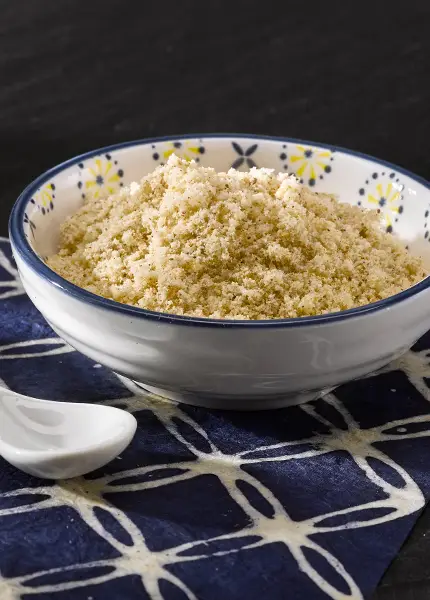
Composition: Yeast products (Saccharomyces cervisiae), Maize bran feed, Chlorella vulgaris
The yeast contained in this product is a special type that stores proteins in its cell walls. These proteins can protect the yeast to a certain extent against mycotoxins – toxins produced by many species of mould. To make these protective proteins available to the organism, the yeast is micronised at the end of its growth process, so that no living yeast cells remain. As a result, unlike other (brewer’s) yeasts, which are suspected of colonising the horse’s large intestine and promoting dysbiosis, it poses no burden to the digestive system.
Technological additives per kg: Binder, 1m558i - Bentonite: 100,000 mg/kg
Analytical constituents: Crude fibre: 6,40%, Crude protein: 23,60%, Crude fat: 0,70%, Crude ash: 11,50%, Calcium: 0,22%, Phosphorus: 0,71%, Sodium: 0,26%
Complementary feed for horses
Feeding Instructions
OKAPI EndoProtect can be added to concentrated feed, sprinkled over moistened hay or haylage. It is suitable for horses whose natural detoxification is disrupted. OKAPI EndoProtect can also be safely given to horses with disorders of the natural detoxification function.
Due to increased levels of technological additives, this feed may only be fed to horses up to 1% of the daily ration.


