


OKAPI Prodic
Supports the physiological pH balance in the intestine
- Helps support a balanced pH level in the hindgut
- Suitable for horses that have previously been fed haylage
- Supports a balanced microbial environment in the hindgut
- Feed separately from mineral supplements
As low as
£33.90
Incl. 0% VAT
£28.25 / 1 kg
Availability:
In stock
Only %1 left
SKU
024
Prices include VAT; depending on the delivery address, VAT may vary at checkout.
More information.
More information.
Product Description
What is OKAPI Prodic?
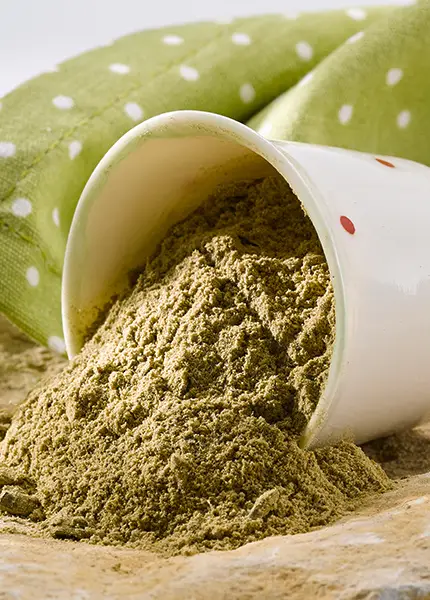
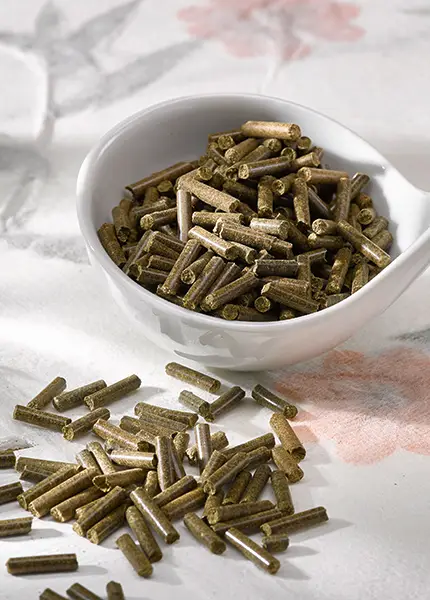
OKAPI Prodic is a complementary feed for horses based on clinoptilolite, a naturally occurring mineral from the zeolite family.
Clinoptilolite has unique physical properties that set it apart from other mineral feed ingredients. While substances such as bentonite and montmorillonite mainly bind water and dissolved compounds, clinoptilolite has the ability to exchange ions at its surface.
Because of this property, clinoptilolite is used as an acidity regulator. Many horse owners therefore choose Prodic as part of a thoughtful feeding programme for horses where maintaining a balanced acid-base environment in the digestive tract is a particular focus.
OKAPI Prodic is easy to incorporate into existing feeding routines and is often fed as part of a structured feeding programme. As clinoptilolite can also bind minerals, we recommend feeding Prodic separately from mineral supplements whenever possible. Alternating feeding periods with regular breaks have proven particularly effective in practice.
Thanks to its unique technological properties, OKAPI Prodic is a valuable addition for horse owners who take a proactive and holistic approach to feeding management.
Is OKAPI Prodic suitable for my horse?
OKAPI Prodic is suitable for adult horses of all breeds and ages.
Can I combine OKAPI Prodic with other products?
Yes. OKAPI Prodic can be fed alongside other feeds such as seasonal herbal blends, hay cobs or sainfoin. However, we recommend allowing at least two hours between Prodic and mineral-containing feeds to minimise the binding of minerals by the clinoptilolite.
Feeding recommendations
How long should I feed OKAPI Prodic?
A twelve-week feeding period has proven successful in practice. During this time, Prodic is fed on a rotating schedule: one week of feeding followed by one week off. This pattern is maintained throughout the full feeding period.
Prodic contains clinoptilolite, a naturally occurring mineral capable of exchanging ions at its surface. As a result, it may also bind certain minerals present in the feed. For this reason, we recommend feeding Prodic separately from mineral supplements whenever possible.
How is OKAPI Prodic fed?
OKAPI Prodic can easily be mixed into soaked Haycobs or other dampened feeds.
As some horses may initially find the mineral taste unfamiliar, it is advisable to start with a smaller amount and gradually increase it to the recommended daily serving. Dampened hay or soaked sainfoin work particularly well for this purpose.
For best results, we recommend feeding Prodic separately from mineral-containing feeds whenever possible.
How do I calculate the correct dosage for my horse?
To calculate the appropriate amount of OKAPI Prodic for your horse, follow these simple steps:
Determine your horse's body weight: Your horse's weight can be established using scales, a weight tape or tools such as the free BCI App from our partner Sanoanimal, available for free on Google Play and Apple Store).
Follow the feeding recommendation: The recommended feeding rate is based on a 600 kg horse. The daily amount is 4–6 scoops (1 scoop = 18 g).
Adjust the amound accoding to your horse´s weight: For example, for a horse weighing 300 kg, 108 g ÷ 600 kg × 300 kg = 54 g per day
This calculation allows the feeding amount to be adjusted accurately according to body weight.
Due to the elevated level of technological additives, this feed may be fed at a maximum rate of 1% of the daily ration.
- 1.2 kg lasts approximately 11–17 days
- 3 kg lasts approximately 4–6 weeks
- 4.5 kg lasts approximately 1.5–2 months
Composition
What is included in OKAPI Prodic?
OKAPI Prodic contains: Grape seed meal
Technological additives: 780,000 mg clinoptilolite of sedimentary origin (1g568)
Analytical constituents: Crude fibre 10.50%, Crude protein 3.40%, Crude fat 1.00%, Crude ash 70.10%, Calcium 1.35%, Phosphorus 0.35%, Sodium 0.49%
Complementary feed for horses
Store in a cool, dry place! Best before: see label.


